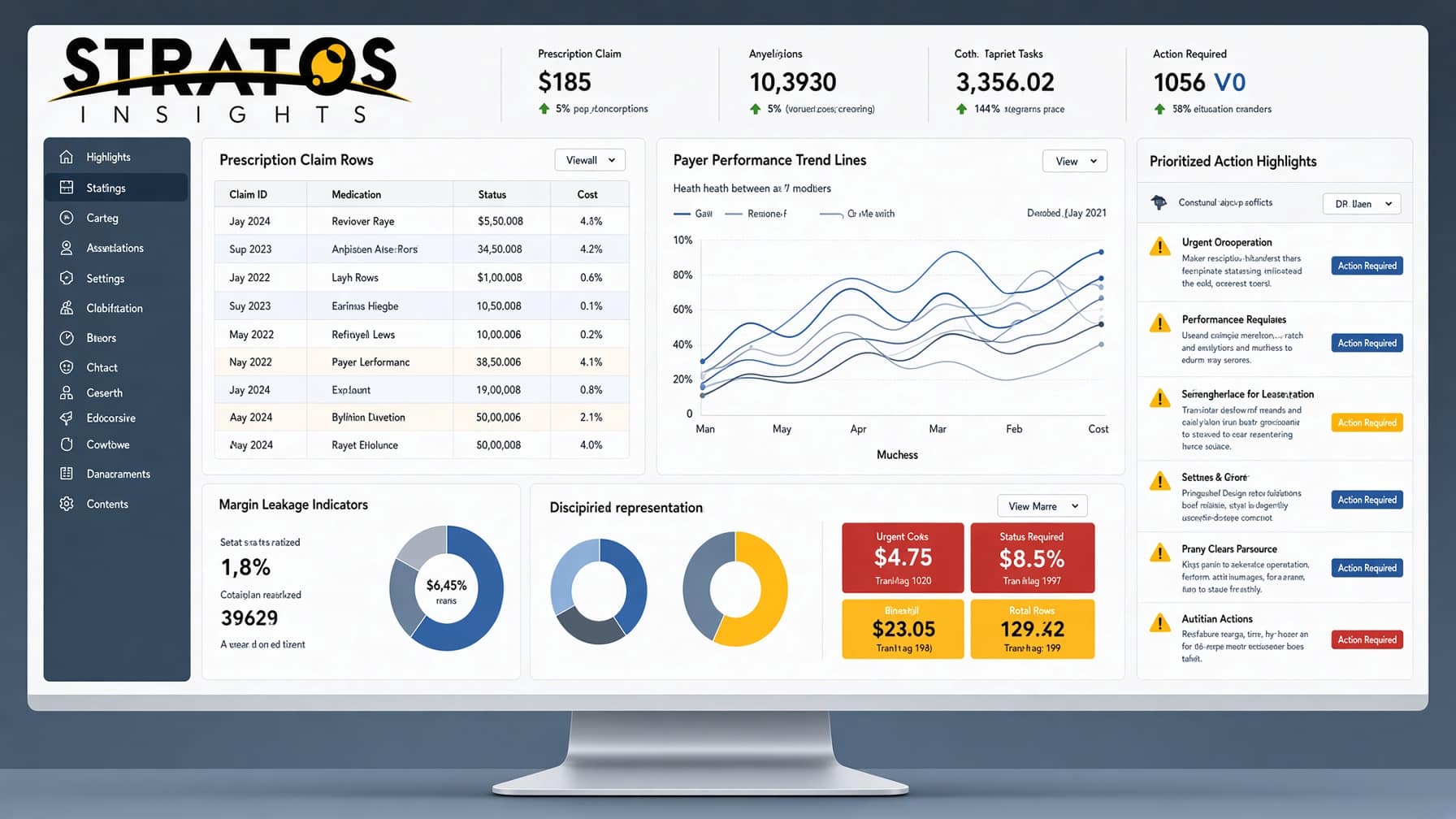
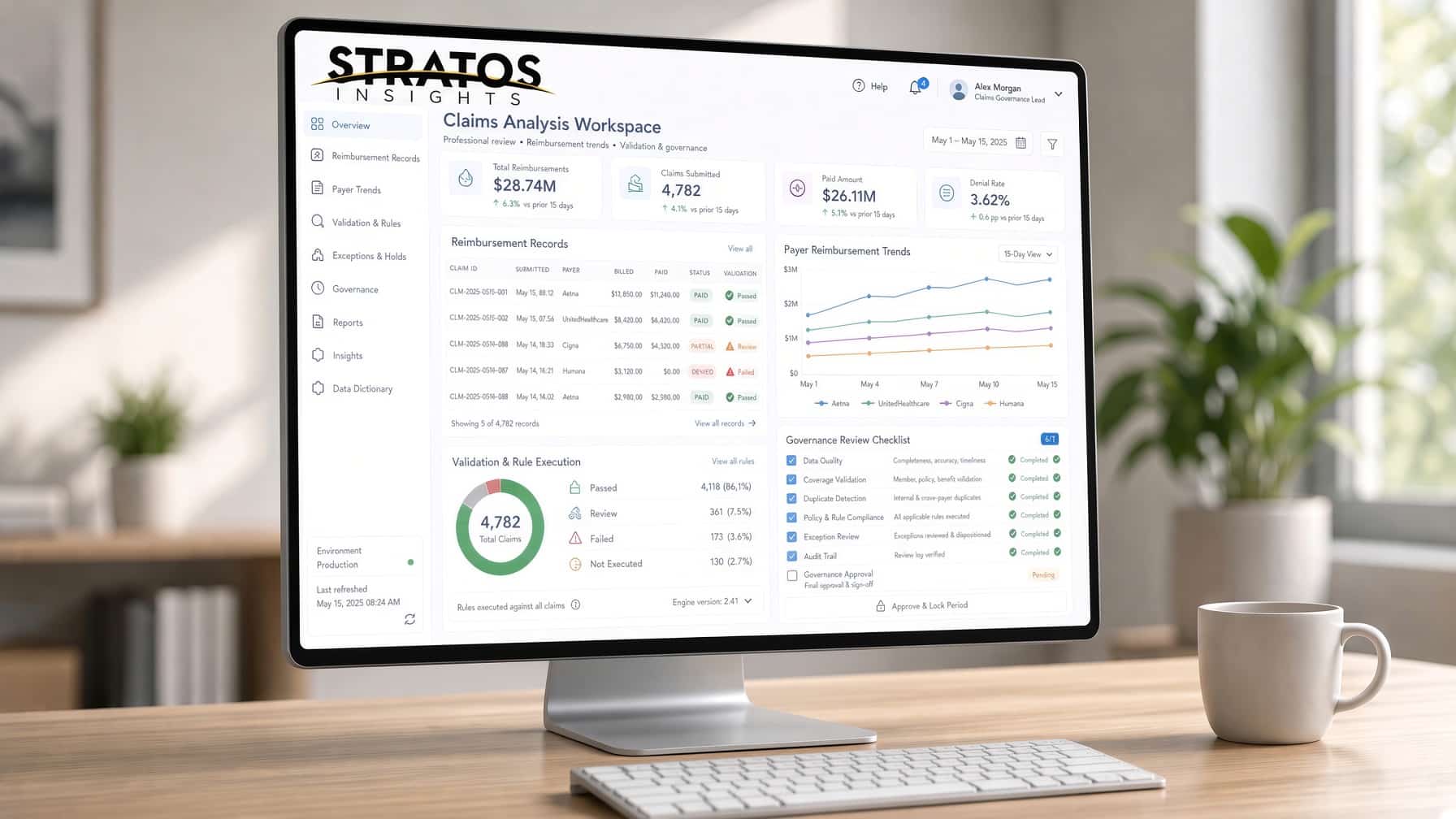
Why oversight leaders need more than supplied reports to validate reimbursement behavior, plan performance, and financial accountability
PBM reporting and independent reimbursement analysis are not the same thing. PBM reporting tells an organization what the PBM has chosen or is required to report about pharmacy benefit activity. Independent reimbursement analysis tests the underlying claims, pricing, reimbursement, fees, rebates, and financial outcomes to determine whether those reports are complete, explainable, and aligned with what the organization needs to know.
That difference matters because pharmacy benefit economics are increasingly difficult to oversee through summary reports alone. Employers, public employee health plans, regulators, health plans, and pharmacy organizations are being asked to make high-stakes financial decisions in an environment shaped by spread pricing concerns, rebate complexity, affiliated pharmacy dynamics, reimbursement variability, and growing fiduciary pressure.
Current policy activity reinforces the point. Federal Trade Commission staff reports in 2024 and 2025 focused public attention on PBM market concentration, specialty drug pricing, and reimbursement practices. In January 2026, the U.S. Department of Labor proposed PBM fee-disclosure rules intended to help self-insured group health plan fiduciaries better understand PBM compensation flows. These developments reflect a larger market reality: reporting is important, but reporting alone does not create accountability.
Key Takeaways
- PBM reporting can provide useful information, but it is not the same as independent validation of reimbursement behavior.
- Independent reimbursement analysis reviews claims-level economics to understand how plan costs, pharmacy reimbursement, fees, rebates, spread, and gross margin are actually produced.
- Summary reports can hide payer variability, below-cost claims, pricing outliers, rebate assumptions, affiliated-channel dynamics, and margin leakage.
- Oversight audiences increasingly need defensible, data-grounded analysis that can support governance, fiduciary review, budget stewardship, and operational decisions.
- Stratos Insights positions independent reimbursement analysis as a practical foundation for PBM oversight, reimbursement integrity, and true profitability visibility.
Featured definition: PBM reporting is information supplied by a pharmacy benefit manager about claims, drug spend, utilization, rebates, fees, and related plan activity. Independent reimbursement analysis is a separate review of the underlying claims and financial data to validate reimbursement behavior, identify patterns, reconcile reported results, and support stronger oversight decisions.
What PBM Reporting Usually Shows
PBM reporting can take many forms. Depending on the contract, plan type, regulatory requirements, and available data, reports may include total drug spend, claim counts, generic dispensing rates, specialty drug trends, rebate summaries, utilization management activity, network performance, formulary impact, member cost share, and pharmacy channel data.
These reports are often necessary. They give plan sponsors and oversight teams a structured way to monitor pharmacy benefit activity over time. They may also satisfy specific contractual or regulatory reporting obligations. A good PBM report can help an employer or public plan see major cost drivers, compare periods, and identify broad utilization movement.
But PBM reporting has an important limitation: it is usually a supplied view of performance. It may be accurate within its definitions, but still incomplete for the oversight question the organization needs to answer. A report can show a total without showing whether the total is reasonable. It can show a rebate estimate without fully explaining the claim-level economics behind net cost. It can show pharmacy spend without making reimbursement behavior transparent enough for independent validation.
The practical issue is not that PBM reports are useless. The issue is that they should not be treated as the only source of truth when financial accountability is on the line.
What Independent Reimbursement Analysis Does Differently
Independent reimbursement analysis starts from a different premise. Instead of asking only what the PBM reported, it asks what the claims and financial data show when reviewed independently.
That review may examine claim-level reimbursement, ingredient cost logic, dispensing fees, patient cost share, plan-paid amounts, pharmacy-paid amounts, spread-related differences, rebates, administrative fees, reversals, adjustments, payer channel behavior, and gross margin impact. The goal is not to make the data more complicated. The goal is to make the economics clearer.
For oversight leaders, independent analysis can answer questions PBM reports may not fully address:
- Do reported totals reconcile with claim-level activity?
- Which claims, products, payers, channels, or pharmacies are driving financial movement?
- Where does reimbursement fall below expected cost or margin thresholds?
- Are spread, fees, or rebate assumptions visible enough to evaluate net performance?
- Are affiliated pharmacy or channel patterns materially different from other activity?
- Which findings deserve action, monitoring, or deeper review?
This is the difference between receiving a report and performing oversight. One provides information. The other tests, reconciles, and prioritizes what the information means.
Why the Distinction Matters Now
PBM oversight is receiving more attention because pharmacy benefit economics affect public budgets, employer health plan assets, member affordability, pharmacy viability, and plan performance. Stakeholders are no longer asking only whether reports are available. They are asking whether those reports provide enough visibility to support accountability.
The FTC’s PBM work has heightened scrutiny around the structure and incentives of the PBM market, including vertical integration, affiliated pharmacy relationships, and specialty drug economics. The DOL’s 2026 proposed fee-disclosure rule focuses on helping plan fiduciaries understand PBM compensation flows. KFF has also summarized how spread pricing, rebate arrangements, and federal reform efforts have become central to PBM policy discussions.
For Stratos Insights audiences, the lesson is practical: transparency is not the finish line. A disclosure or report may make information available, but an organization still needs to know whether that information answers the right questions, reconciles with the claims, and supports defensible decision making.
Where PBM Reports Can Fall Short
PBM reporting can fall short for several reasons. Some gaps are technical. Others are contractual, operational, or methodological. Most are not obvious from the summary page.
Definitions May Shape the Result
Reports depend on definitions. Net cost, gross cost, rebate value, specialty claim, administrative fee, pharmacy reimbursement, and spread may be defined differently across arrangements. A report may be internally consistent but still difficult to compare against the oversight question an employer, public entity, or pharmacy organization is trying to answer.
Aggregation Can Hide Exceptions
A total can look acceptable while individual claims reveal meaningful exceptions. Below-cost reimbursement, channel-specific differences, high-cost outliers, or payer-specific patterns may be diluted when they are rolled into broad averages.
Timing Can Distort the View
Claims, rebates, reversals, adjustments, and fees may not settle on the same schedule. A quarterly report can be accurate for its reporting window but still incomplete for understanding final net economics.
Incentives May Affect What Is Emphasized
PBMs play a central role in benefit administration and may have business relationships across insurers, pharmacies, manufacturers, and service providers. That does not mean every report is wrong. It does mean independent oversight should evaluate the data rather than relying only on the vendor’s summary of it.
How Independent Analysis Supports Public and Private Oversight
Independent reimbursement analysis is valuable because it gives different stakeholders a clearer basis for action.
For Public Sector Stakeholders
Attorneys General, Offices of Inspector General, Insurance Commissioners, state associations, and public employee health plans often need to understand whether pharmacy benefit arrangements support stewardship of public or member-funded dollars. Independent analysis can help identify below-cost claim patterns, reimbursement variability, and PBM reporting limitations that deserve closer review.
For Employers and Plan Sponsors
Self-insured employers and other plan sponsors need enough visibility to evaluate vendor arrangements and fulfill governance responsibilities. Independent reimbursement analysis can help employers understand whether reported plan performance is supported by claim-level evidence, whether compensation flows are sufficiently visible, and whether the organization is asking the right questions of its PBM.
For Health Plans and Payer Organizations
Health plans, Medicare Part D organizations, and Medicaid managed care organizations operate in complex reimbursement environments. Independent analysis can support review of payer performance, reimbursement outliers, network economics, and claim patterns that may affect cost management or financial predictability.
For Pharmacy Organizations
Multi-location pharmacy groups need to understand true gross margin performance. PBM reports may show volume or reimbursement totals, but they may not reveal where payer mix, acquisition cost, preferred therapy opportunities, or reimbursement variability is affecting actual profitability. Independent analysis helps translate claims activity into operational insight.
The Questions Independent Analysis Should Answer
A strong independent reimbursement analysis should be organized around decision-useful questions. The analysis should not simply recreate the PBM report in a different format. It should test the economics beneath the report.
- Reconciliation: Do PBM-reported totals align with claim-level data, financial files, and expected contract logic?
- Reimbursement integrity: Are claim reimbursements consistent with expected pricing rules, cost benchmarks, or margin thresholds?
- Spread and compensation visibility: Can the organization identify where plan-paid amounts, pharmacy reimbursement, fees, and other compensation flows differ?
- Payer and channel performance: Which payers, pharmacy channels, networks, drugs, or claim types are driving the largest financial differences?
- Outlier review: Which claims or categories materially affect the overall result and require further explanation?
- Action prioritization: Which findings are most important for governance, vendor management, budget planning, or operational improvement?
The last question is especially important. Oversight should not bury leaders in raw data. It should surface the findings that matter most.
PBM Reporting vs. Independent Analysis: A Practical Example
Consider a self-insured employer reviewing a quarterly PBM report. The report shows total pharmacy spend, utilization, specialty trend, rebate estimate, and generic dispensing rate. At a summary level, the plan appears to be performing within expectations.
Independent reimbursement analysis could reveal a more detailed picture. A subset of specialty claims may be driving a disproportionate share of spend. Certain claims may show material differences between plan-paid amounts and pharmacy reimbursement. Rebate estimates may not fully explain net cost by product. A pharmacy channel may be performing differently than expected. Member cost share may move in a different direction than plan cost.
None of those findings necessarily means the PBM report was false. It means the report was not sufficient by itself to answer the oversight question. The organization needed independent analysis to understand why the result occurred and whether the result deserves action.
What Good Independent Analysis Should Avoid
Independent analysis should be disciplined. It should not turn every variance into an accusation or present every reporting gap as misconduct. PBM economics are complex, and some differences may have legitimate explanations.
A credible analysis should avoid:
- unsupported legal or regulatory conclusions;
- assuming every spread or fee is improper without reviewing the applicable arrangement;
- treating one claim-level outlier as a system-wide pattern without evidence;
- using technical jargon where plain financial explanation is needed;
- producing dashboards that create more work instead of clearer decisions.
The strength of independent reimbursement analysis is its credibility. It should be careful, evidence-based, and useful for decision makers.
How Stratos Frames the Oversight Standard
Stratos Insights approaches this issue from a simple principle: visibility is not the same as accountability. PBM reporting may create visibility into selected metrics. Independent reimbursement analysis creates a stronger basis for accountability by validating claim-level economics and prioritizing what the organization should understand next.
That approach connects directly to Stratos’ core message pillars.
True Profitability Visibility
For pharmacy organizations and payer-focused stakeholders, true profitability cannot be evaluated through invoice comparisons or summary reports alone. It requires understanding actual gross margin performance across payers, channels, reimbursement environments, and purchasing patterns.
Reimbursement Performance Clarity
Independent analysis helps organizations see how claim activity, payer behavior, and reimbursement trends affect financial performance. It turns broad reporting into clearer operational and governance insight.
Prioritized, Actionable Insight
The best analysis does not ask leaders to dig endlessly. It identifies the most important opportunities and risks across loss mitigation, reimbursement trends, preferred therapy, adherence, margin improvement, and payer performance visibility.
Independent Oversight and Integrity
PBM reporting can inform oversight, but independent analysis strengthens it. It helps organizations evaluate whether reported results are supported by claims-level economics and whether reimbursement behavior aligns with expectations.
When to Request Independent Reimbursement Analysis
Organizations should consider independent reimbursement analysis when the cost of uncertainty is high. Common triggers include:
- PBM reports provide totals but not enough detail to validate the result;
- pharmacy spend is rising without a clear claim-level explanation;
- rebate, fee, or spread-related reporting is hard to reconcile;
- public or board-level scrutiny requires a more defensible oversight record;
- pharmacy reimbursement complaints or margin pressure are increasing;
- payer or channel performance appears inconsistent;
- leadership is making budget, vendor, or operational decisions without independent reimbursement visibility.
The starting question is straightforward: What decisions are we making today based only on supplied PBM reports? If the answer involves budget stewardship, fiduciary responsibility, vendor accountability, or profitability, independent analysis may be warranted.
Conclusion: Reporting Informs, Analysis Validates
PBM reporting matters. It gives organizations a structured view of pharmacy benefit activity and can support routine monitoring. But reporting should not be confused with independent reimbursement analysis. Reporting informs. Analysis validates.
For public-sector leaders, employers, health plans, and pharmacy organizations, the difference is becoming more important as PBM oversight expectations rise. Summary reports can show what happened. Independent reimbursement analysis helps explain how it happened, whether the economics reconcile, and where accountability questions should focus.
Stratos Insights helps organizations move beyond reimbursement assumptions and supplied reporting by bringing independent visibility to claims-level economics, PBM performance, and true profitability. If your organization needs to understand whether PBM reporting aligns with actual reimbursement behavior, the next step is a focused oversight discussion grounded in your own data.
FAQ
What is the difference between PBM reporting and independent reimbursement analysis?
PBM reporting is information supplied by the pharmacy benefit manager. Independent reimbursement analysis reviews underlying claims and financial data separately to validate reimbursement behavior, reconcile reported results, and identify meaningful patterns.
Are PBM reports unreliable?
Not necessarily. PBM reports can be useful and accurate within their definitions. The concern is that they may not answer every oversight question or provide enough claim-level detail for independent validation.
Why do employers need independent reimbursement analysis?
Employers and plan sponsors may need independent analysis to understand PBM compensation flows, evaluate plan performance, support fiduciary review, and confirm whether reported results align with claim-level economics.
How does independent analysis support public-sector oversight?
It can help public entities evaluate reimbursement patterns, below-cost claims, reporting limitations, and financial behavior tied to taxpayer-funded or member-funded pharmacy benefits.
What data is used in independent reimbursement analysis?
The analysis may use claims files, plan-paid amounts, pharmacy reimbursement, patient cost share, acquisition cost information where available, rebate and fee data, reversals, adjustments, and payer or channel identifiers.
Can independent analysis replace a formal audit?
No. Independent analysis can support oversight and identify areas for review, but it is not a substitute for legal, actuarial, regulatory, or formal audit advice when those services are required.
When should an organization review PBM reporting independently?
A review is useful when reported results are difficult to reconcile, pharmacy spend is rising, rebate or fee visibility is limited, margin pressure is increasing, or leaders need a stronger oversight record.